

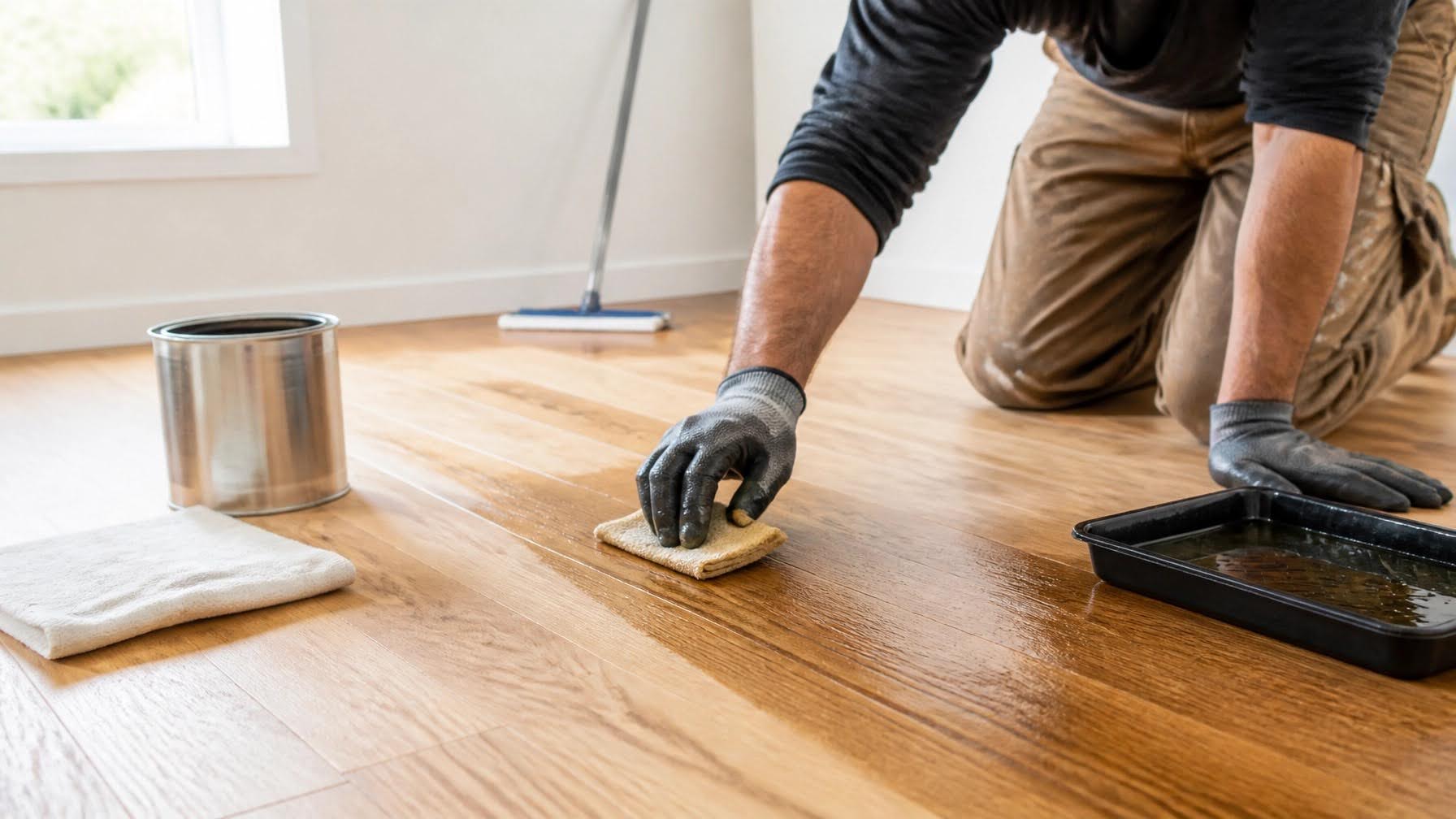
If your hardwood floors are starting to look dull, scratched, or worn, you may assume they need to be completely sanded and refinished. That is not always the case. Depending on the condition of the wood and its existing finish, a screen and recoat may be enough to refresh the surface and extend the useful life of the finish.
At Prospect Hardwood Flooring, we help you understand which level of restoration makes sense before hardwood refinishing in Rockville, MD begins. A screen and recoat and a full refinishing project are very different services, so knowing what each one can and cannot address helps you set realistic expectations for your floors.
What Is a Screen and Recoat?
A screen and recoat is primarily a finish-maintenance service. Instead of sanding the hardwood down to bare wood, the existing finish is lightly abraded so that a new compatible finish coat can properly adhere.
Because the process does not remove the floor's stain and expose bare wood, it is generally intended for floors where the underlying wood remains in good condition.
A screen and recoat may be considered when you are dealing with:
A finish that has become dull
Light surface wear
Minor scratches limited to the finish
Early signs of traffic patterns
Floors that need renewed surface protection
The existing finish system and floor condition still need to be evaluated first. A screen and recoat is not appropriate for every hardwood floor or every type of existing coating.
What Does Full Hardwood Refinishing Involve?
Full refinishing is a more extensive restoration process. The existing floor is professionally sanded to remove the old finish and expose a fresh wood surface before stain, if selected, and new protective finish are applied.
Professional dustless hardwood refinishing may be appropriate when surface maintenance alone cannot adequately address the condition of the floor.
Full refinishing may be considered when you have:
Deeper scratches or visible wear
Areas where the finish has deteriorated significantly
Uneven coloration
Worn traffic paths
A stain color you want to change
Surface damage that extends beyond the finish
The suitability of refinishing also depends on your flooring's construction, condition, and previous sanding history.
The Main Difference Is How Deep the Restoration Goes
The simplest way to compare these services is to look at what part of the floor is being addressed.
A screen and recoat primarily works with the existing finish. Full refinishing works with the wood surface as well as the finish.
That distinction determines what each service can reasonably accomplish.
If a scratch is contained within the finish, refreshing that finish may be sufficient. If the damage extends into the wood, applying another protective coat does not remove the underlying damage.
That is why identifying the condition of the floor before choosing a service matters.
Can a Screen and Recoat Change Your Floor Color?
If your primary goal is to significantly change the existing stain color, full refinishing is generally the more relevant service to discuss.
A standard screen and recoat does not involve sanding the entire floor back to bare wood. The existing color therefore remains part of the floor's appearance.
Full refinishing provides an opportunity to evaluate a different stain after the old finish and stain have been appropriately removed. The final result still depends on your wood species, natural grain, existing condition, and chosen finish.
If you are considering a larger flooring update, you can also explore hardwood flooring options to compare different wood tones and appearances.
What If Your Floors Have Deep Scratches?
Scratch depth is an important factor when deciding between the two services.
Light marks contained within the finish may respond differently from gouges or scratches that penetrate into the wood. A screen and recoat should not be treated as a way to hide damage that actually requires sanding or localized repair.
Full refinishing can address a broader range of surface wear, but even sanding has limits. Extremely deep gouges or damaged boards may require further evaluation rather than aggressively sanding the entire floor to match one damaged location.
A flooring professional can assess these areas before the restoration plan is finalized.
What About Fading and Uneven Color?
If your floor has changed color from years of use, sunlight, rugs, or furniture placement, it may require more than a maintenance coat to achieve the improvement you want.
Because full refinishing removes the existing surface finish and prepares the wood again, it provides more flexibility when addressing broader color inconsistencies or changing the overall appearance.
However, natural wood variation will still remain. Refinishing should restore and improve suitable hardwood, not make every board identical.
Choosing the Right Service Can Preserve Your Existing Hardwood
One of the advantages of hardwood flooring is that suitable floors can often be maintained and restored rather than immediately replaced.
The key is choosing an appropriate level of work.
If your finish is showing early wear but the wood beneath remains in good condition, waiting until extensive damage develops may mean missing the opportunity to consider a less intensive maintenance approach. Conversely, choosing a screen and recoat when your floor actually requires sanding may leave the deeper problems visible.
If you are unsure which category your floor falls into, you can request a hardwood flooring estimate and have its current condition considered before deciding how to proceed.
When Full Refinishing May Not Be Enough
Full refinishing is a powerful restoration option, but it is not the solution to every hardwood flooring problem.
Before sanding begins, additional evaluation may be necessary if you notice:
Loose or unstable boards
Significant moisture-related damage
Deep structural damage
Severely damaged individual boards
A floor that has undergone previous sanding
In these situations, the condition of the hardwood needs to be considered before cosmetic restoration becomes the priority.
If you have specific concerns about your existing floor, speak with a flooring specialist about whether refinishing, repair, or another approach is appropriate.
How Do You Know Which Option Your Rockville Floors Need?
Start by looking at what you actually want to change.
If your primary concerns are dullness and relatively light finish wear, ask whether a screen and recoat is suitable. If you have deeper scratches, substantial wear, unwanted stain color, or broader surface deterioration, discuss whether full refinishing is the more appropriate option.
Do not base the decision solely on the age of the floor. Two hardwood floors of similar age can be in very different condition depending on their finish, previous refinishing, everyday use, and maintenance history.
For hardwood refinishing in Rockville, MD, Prospect Hardwood Flooring can help you evaluate the existing finish, wood condition, visible damage, and your goals before choosing between a screen and recoat and full refinishing. Request an estimate for your hardwood floors or contact Prospect Hardwood Flooring to discuss the restoration approach that makes sense for your existing floor.


